











🏝️SYP Forum
Student & Young Professionals Forum
From students to professionals: insights, connections, and opportunities
- International Forum
- Jan. 13, 2026, 13:30-14:45 pm.
- Room Xcaret 4
The Student & Young Professionals (S&YP) Activity Committee of the Industrial Electronics Society (IES) will organize the SYP Forum, a special event aimed at helping student and young professional members stay connected within the IES community. The SYP Forum will provide a unique opportunity to ask questions and receive professional advice directly from IEEE Fellows, the IES President, AdCom members, and other experienced colleagues.
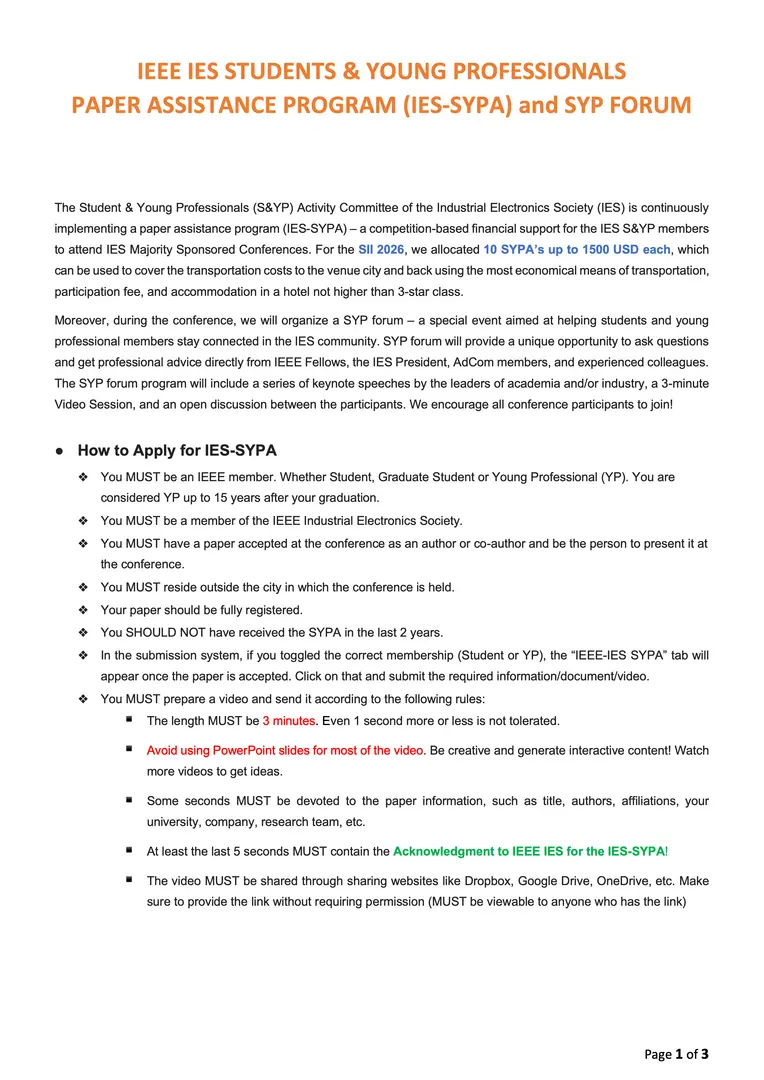
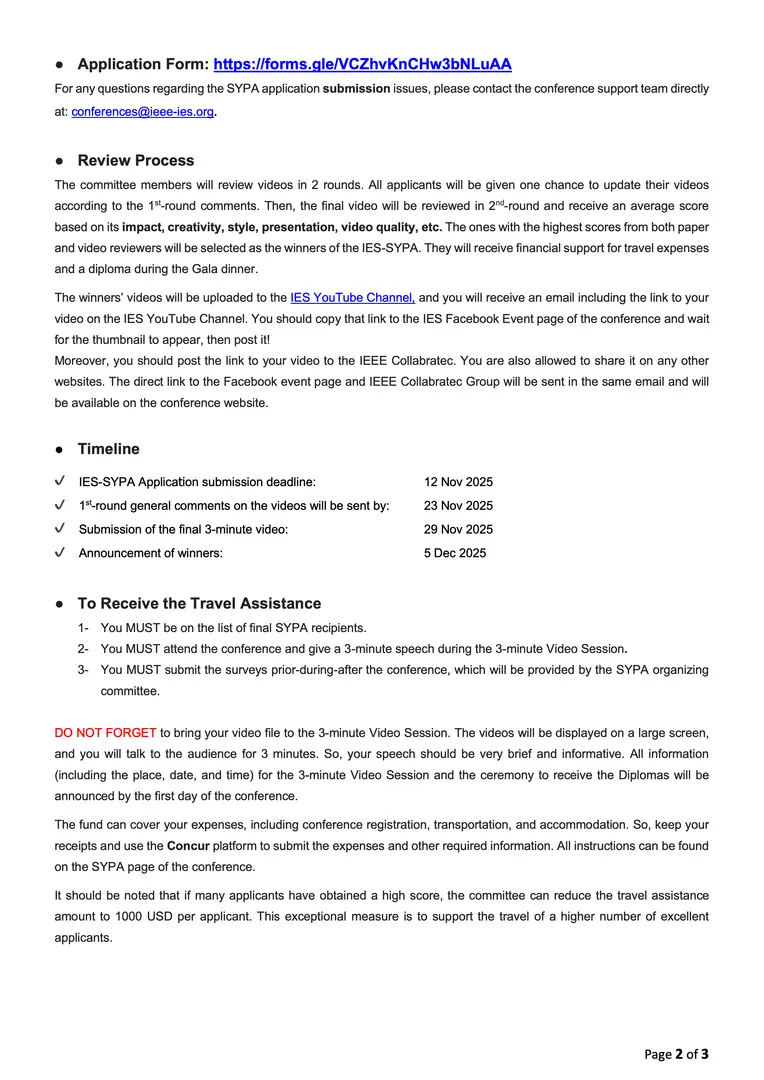
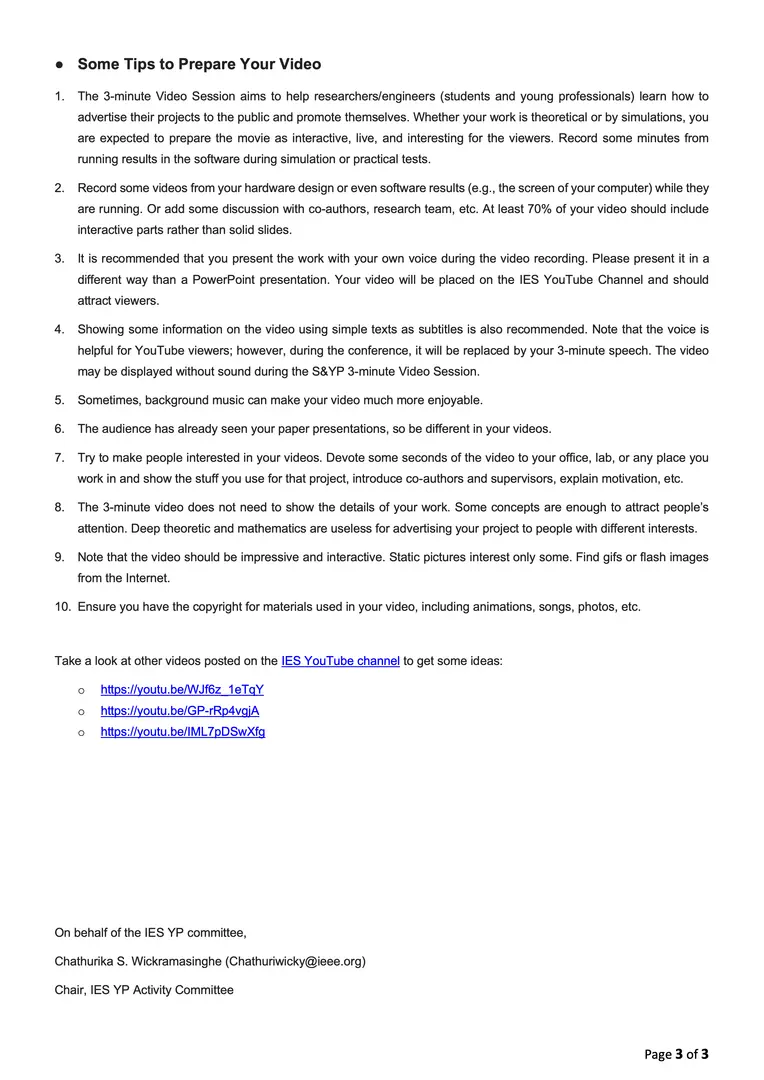
To support participation, the S&YP Activity Committee also offers financial assistance to attend SII 2026 through the IEEE IES Students & Young Professionals Paper Assistance Program (IES-SYPA). Approved finalists of this program will be invited to join the SYP Forum and take part in a 3-minute Video Session.
The SYP Forum will also feature a series of keynote speeches by leaders from academia and industry, followed by an open discussion among participants. We encourage all conference attendees to join this exciting event!
Schedule:
- IES-SYP Introduction (3 minutes).
- Keynote Talk 1 by Dr. Amy Kyungwon Han, Seoul National University (20 minutes).
- Keynote Talk 2 by Dr. Fumio Ito, Chuo University (20 minutes).
- 3-minute Video Session (24 minutes = 8 IES-SYPA Winners x 3 minutes).
- Networking (8 minutes).
🏝️Keynote Talks

Dr. Amy Kyungwon Han
South Korea
Amy Kyungwon Han is an Assistant Professor of Mechanical Engineering at Seoul National University in Seoul, Korea. She was a postdoctoral researcher at Stanford University and received a Ph.D. and M.S. from Stanford University and a B.S. from Georgia Tech. Her research includes soft actuators, sensors, medical robotics, haptics, and biomimetics. Prof. Han's awards include the MIT Technology Review's Innovators Under 35 Asia Pacific, Rising Star of RoboSoft, Nokov ICRA New Generation Star, APBEC Young Scholar Award, Best RA-L Paper Award, and ICRA Best Poster Presentation. She was also recognized as one of the 50 Women in Robotics and a Rising Star in Mechanical Engineering. In addition to her research and academic work, she serves as an associate vice president of the Technical Activities Board and as a co-chair of the Technical Committee on Haptics within the IEEE Robotics and Automation Society.

Dr. Fumio Ito
Japan
Fumio Ito is an Assistant Professor in the Department of Precision Mechanics, Faculty of Science and Engineering, Chuo University, Japan. He received his B.E., M.E., and Ph.D. degrees from Chuo University. His research interests include bio-inspired underwater robotics, soft robotic actuators, and locomotion mechanisms in viscous and confined environments. His recent work focuses on bacterium-inspired swimming robots and soft actuation systems designed to exploit fluid-structure interactions.
🏝️IES-SYPA Winners
Takeshi Kido, Kyushu University (Japan), with the paper "Modeling and Evaluation of Soft Gears for Wearable Robots" (Submission 356).
Peter So, Technical University of Munich (Germany), with the paper "VF Designer: CAD-Guided Virtual Fixtures for Enhanced Teleoperation for Multi-Step Manipulation Tasks" (Submission 367).
Austin Wilson, Case Western Reserve University (United States), with the paper "Enhancing the NAO: Extending Capabilities of Legacy Robots for Long-Term Research" (Submission 347).
Alkesh Kumar Srivastava, Temple University (United States), with the paper "DELIVER: A System for LLM-Guided Coordinated Multi-Robot Pickup and Delivery using Voronoi-Based Relay Planning" (Submission 292).
Ze Zhang, Chalmers University of Technology (Sweden), with the paper "Collision-Free Navigation of Mobile Robots via Quadtree-Based Model Predictive Control" (Submission 194).
Ada Aster, Wentworth Institute of Technology (United States), with the paper "Design of a Low-Cost Strain Gauge Array System for Wind Turbine Blade Damage Detection" (Submission 298).
Edgar Rafael Hernandez Rios, Universidad Autonoma del Estado de Hidalgo (Mexico), with the paper "A Web-Based Multi-Robot Teleoperation Platform: Architecture, Implementation, and User Evaluation" (Submission 391).
Kavyan Zoughalian, Sheffield Hallam University (United Kingdom), with the paper "A ROS-Based Multi-Modal Architecture for Fall Detection and Response with a Social Robot" (Submission 302).
🏝️IES-SYPA Application Guidelines
Specific instructions for applying to IES-SYPA can be found on the Travel Grants & Registration Discounts page.
🐚🪸Printed Version