














SII 2026
SII 2026

The 2026 IEEE/SICE International Symposium on System Integration (SII 2026) will be held from January 11 to 14, 2026, in the vibrant city of Cancun, Mexico

Institute of Electrical and Electronics Engineers (IEEE)IEEE Robotics and Automation Society (RAS)IEEE Industrial Electronics Society (IES)Society of Instrument and Control Engineers (SICE)SICE System Integration Division (SI)
OMRON SINIC X CorporationUnitree RoboticsHitachi, Ltd.Applied Science and Artificial Intelligence Institute (ASAII)Consejo Quintanarroense de Humanidades, Ciencias y Tecnologías (COQHCYT)Federación Mexicana de Robótica (FMR)

Countdown to #SII2026

0Days
0Hours
0Minutes
0Seconds

🏝️Plenary Sessions & Speakers
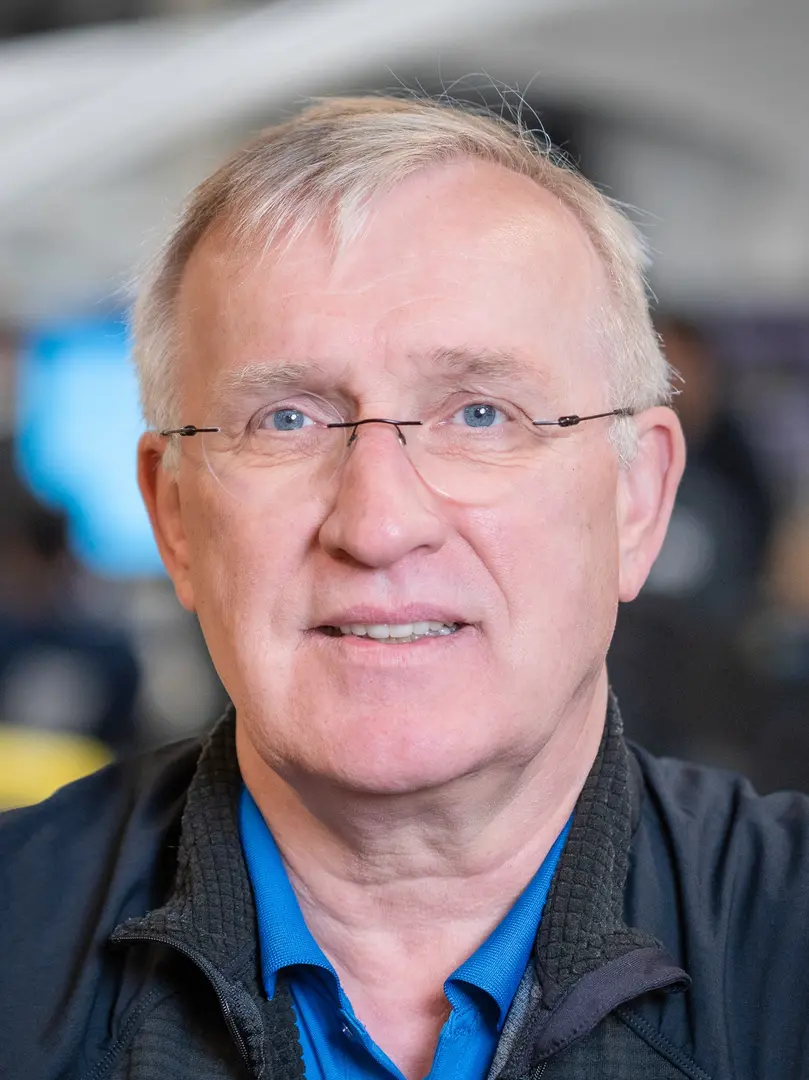
Prof. Henrik I. Christensen, IEEE FellowProf. Mariagrazia Dotoli, IEEE FellowProf. Tadahiro Taniguchi
Prof. Henrik I. Christensen, IEEE Fellow

Prof. Henrik I. Christensen, IEEE Fellow

Professor @ UC San Diego

United States

Henrik I. Christensen is a distinguished professor of computer science at UC San Diego and the director of robotics. The main research covers vision, robotics, and AI. He has published in excess of 400 contributions and co-founded six companies, including robust.ai and Robo-Global. The research has been recognized by a large number of best paper awards, and he was awarded the Joseph Engelberger. Henrik is also the main editor of the US National Robotics Roadmap (2009, 2013, 2016, 2020, and 2024).
Presentation TitleDesign of Autonomous Vehicles for Micro-Mobility
Presentation AbstractIncreasingly, autonomous vehicles are entering our daily lives for the delivery of groceries, for security, for cleaning of roads, etc. Robust operation in everyday environments is a challenge with changes in weather, people's behavior, disregarding traffic rules, etc. Over the last five years, we have designed autonomous vehicles for people and mail delivery on the UC San Diego campus. The vehicle has to navigate a campus that is constantly under construction; there are 70,000+ people on campus, and there is a need to operate in the presence of 5,000+ other vehicles. A full-stack system has been designed for autonomous operation. This includes methods for real-time mapping of campuses, detection and tracking of people, cars, skateboards, etc. Estimation of the intent of other road-users and dynamic planning of missions to achieve robust autonomy. In this presentation, we will discuss how a mixture of sensors, from lidar and radar to cameras, GPS, sonar, and IMUs, has been integrated for robust performance. We will present both the system 1.0 that was used for a six-month mail delivery deployment on campus and also the latest system 2.0, which is currently deployed on campus for micro-mobility and transitioned to use for autonomous scooters. We will discuss the overall system's design, strategies for early and late fusion, and summarize major lessons learned.
Keywords🤖 robotics🧠 artificial intelligence👁️ computer vision
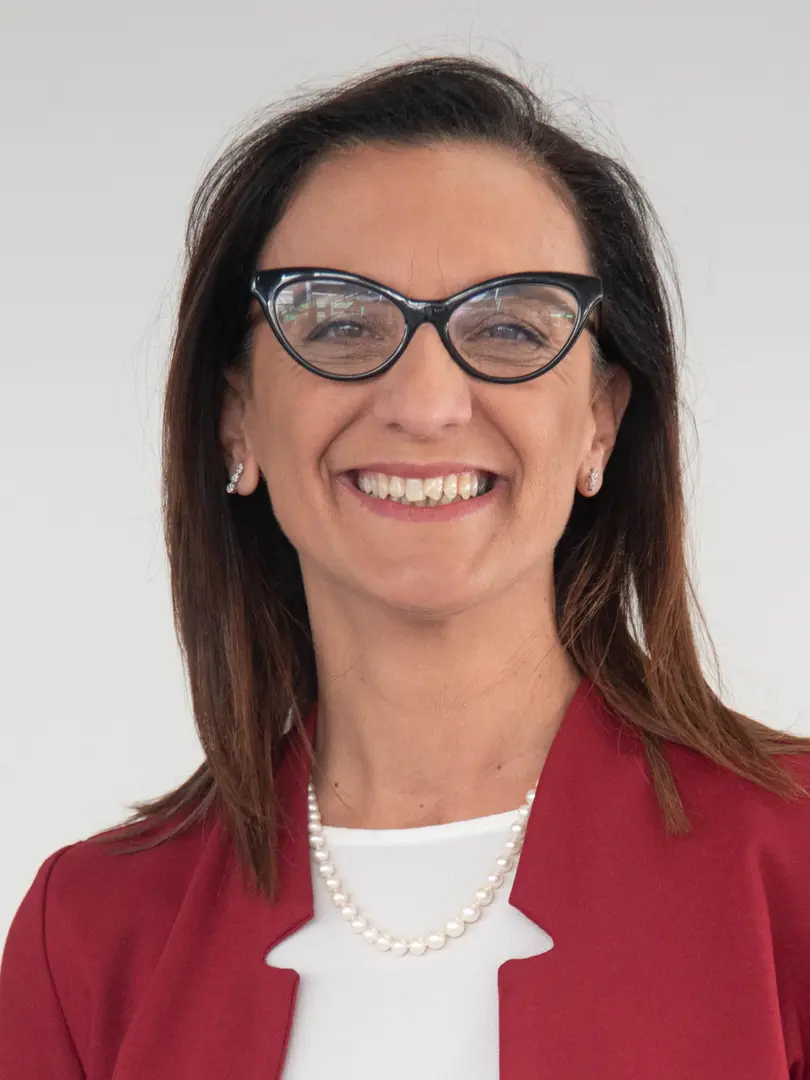
Prof. Mariagrazia Dotoli, IEEE Fellow

Prof. Mariagrazia Dotoli, IEEE Fellow

Professor @ Politecnico di Bari

Italy

Mariagrazia Dotoli is a Full Professor in Automation at Politecnico di Bari, Italy, where she is also the Founder and Coordinator of the Italian National PhD Program on Autonomous Systems. She is the founder and director (2012) of the Decision & Control Laboratory of Politecnico di Bari and the founder (2012) of Politecnico di Bari spin-off company Innolab S.r.l. She has authored 300+ international publications in automation. Her h-index in Google Scholar equals 48, with 8000+ citations. Prof. Dotoli is an IEEE Fellow and serves as VP for Membership & Student Activities of IEEE SMCS and AdCom member of IEEE RAS.
Presentation TitleControl Frameworks for Energy Trading and Sharing in Smart Grids
Presentation AbstractThe evolution of modern power systems toward decentralization, flexibility, and sustainability is driving the emergence of new paradigms for smart energy management. Among these, energy trading and sharing play a central role in enabling active participation of distributed users and optimizing the use of renewable generation and storage resources across all levels of the smart grid, from local communities to districts and microgrids. This talk presents advanced control frameworks to support energy trading and sharing in power systems composed of heterogeneous actors such as prosumers, electric vehicles, and storage providers. The proposed approaches integrate game-theoretic models and distributed control techniques to enable intelligent strategies that balance local objectives with system-wide efficiency. Special attention is given to the scalability, technical feasibility, and economic efficiency of the proposed mechanisms, which are validated through simulations based on realistic community-scale scenarios.
Keywords⚙️ automation🎛️ control🏭 industrial systems
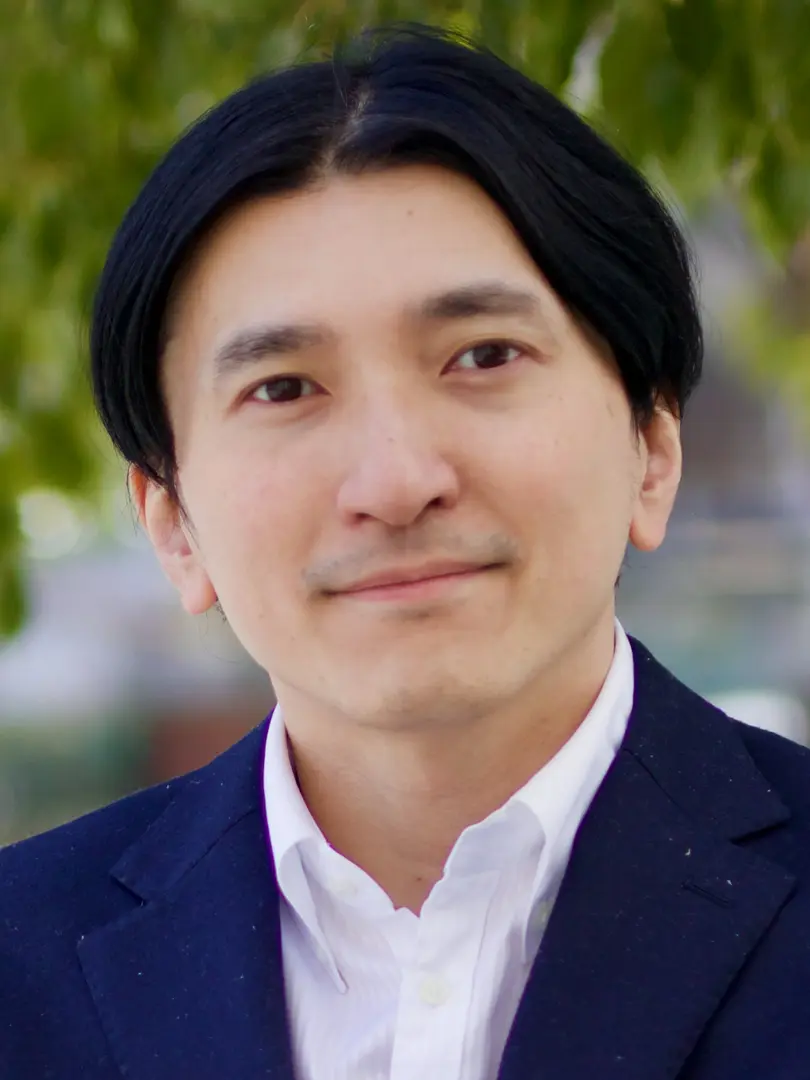
Prof. Tadahiro Taniguchi

Prof. Tadahiro Taniguchi

Professor @ Kyoto University.Affiliate Professor @ Ritsumeikan University

Japan

Tadahiro Taniguchi received his M.E. and Ph.D. degrees from Kyoto University in 2003 and 2006. He was a JSPS Research Fellow (DC2) at Kyoto University from 2005 to 2006, followed by JSPS PD fellowships at Kyoto University from 2006 to 2008. He then joined Ritsumeikan University as Assistant Professor (2008-2010) and Associate Professor (2010-2017), spending 2015-2016 as Visiting Associate Professor at Imperial College London. From 2017 to 2024, he was Professor in the Department of Information and Engineering, Ritsumeikan University, and Visiting General Chief Scientist at Panasonic Holdings Corporation. Since April 2024, he has been Professor at the Graduate School of Informatics, Kyoto University, Affiliate Professor at Ritsumeikan University, Senior Technical Advisor at Panasonic Holdings, and Chair of the IEEE Cognitive and Developmental Systems Technical Committee. His research focuses on machine learning, emergent systems, cognitive robotics, and symbol emergence.

Presentation TitleCollective Predictive Coding and World Models in LLMs: A System 0/1/2/3 Perspective on Hierarchical Physical AI
Presentation AbstractThe rapid evolution of foundation models is propelling robotics toward Physical AI, seamlessly integrating perception, action, and language. The role of language is attracting attention not only for human-robot interaction but also for representation learning and policy learning. In this talk, I will discuss the intersection between world models and large language models. As a background theory, this talk introduces Collective Predictive Coding (CPC) and the System 0/1/2/3 architecture as a unified framework for this challenge. We posit that symbol emergence results from decentralized Bayesian inference among interacting agents, reinterpreting Large Language Models (LLMs) as "collective world models" that encode shared human priors. To implement this in Physical AI, we extend Kahneman's dual-process theory into four hierarchical layers: System 0 (physical dynamics), System 1 (reflexive perception-action), System 2 (deliberative planning), and System 3 (collective symbol emergence). We argue that true Hierarchical Physical AI must integrate these multi-timescale loops, aligning internal world models with collective ones through CPC. I hope this talk will provide new insights into the future of robotics.
Keywords🧩 symbol emergence🧠 artificial intelligence🤖 cognitive robotics